
Chester history · 1539 to now
The Roodee
Racing has been held on this patch of reclaimed harbour since 1539, which makes Chester the oldest racecourse still in operation anywhere in the world.
The Roodee is a flat green oval below the western city walls, and it is the strangest racecourse in Britain: barely a mile round, ringed by medieval stone, with a home straight so short that the race is effectively over before it begins.
It is also, on the evidence, the oldest. Guinness World Records recognises Chester as the oldest racecourse still in operation, and the first recorded meeting was held here on 9 February 1539.
The short version
Why it is called the Roodee
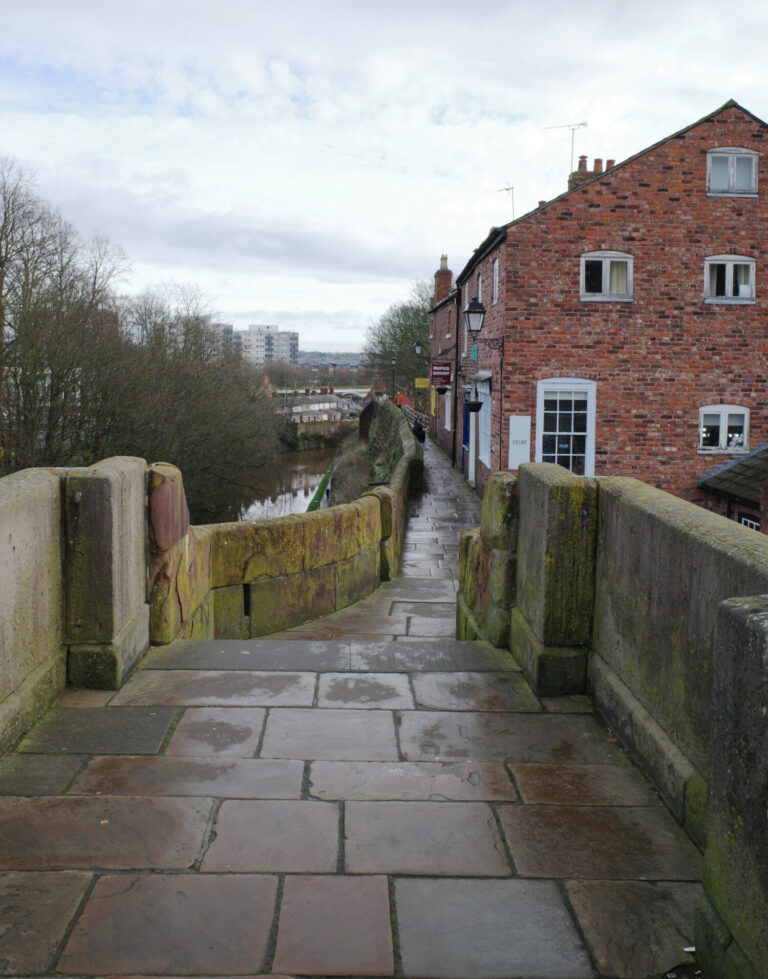 Photo: habiloid (CC BY-SA 2.0) via Wikimedia Commons
An island, and a cross
Roodee is a worn-down form of Rood Eye — the island of the cross. A rood is a cross; an eye, in this part of England, is an island or a patch of dry ground in wet country. Both halves of the name describe something that is still there.
The island was a raised mound in what is now the infield, and it carried a small stone cross whose base survives on the course today. It marked the boundary of a Benedictine nunnery founded in the mid-twelfth century and dissolved in 1540. The water it stood in was the old harbour: this whole flat green expanse was the Roman and medieval port of Chester, and it became dry land only because the Dee silted up.
Henry Gee and the first race
A mayor with a public order problem, and an idea.
The first recorded race on the Roodee was run on 9 February 1539 with the consent of the mayor, Henry Gee. Some accounts push racing here back to 1512. Tradition holds that Gee was looking for something to replace the city’s Shrove Tuesday football match, an annual free-for-all between the trade companies that had become genuinely dangerous, and that he substituted a horse race for the ball.
Gee has another, better claim on the language. It is often said that the affectionate word gee-gee for a horse comes from his name. That is folk etymology rather than fact, but it is a good story and Chester has been telling it for four hundred years.
Bells, cups and the shape of the season
 Photo: Richard Humphrey (CC BY-SA 2.0), via Wikimedia Commons
1540–1824
The earliest prizes were the Chester Bells, awarded to a horse that won five times. In 1744 the Grosvenor Gold Cup was put up — the family were already the dominant landowners on the doorstep and would remain closely involved. From 1745 the meeting ran to four days, and in 1766 a May Festival was established that has anchored the racing calendar here ever since.
The Tradesmen’s Cup Race, first run in 1824, was funded by subscription from the city’s traders and grew into the Chester Cup, still the best-known race of the meeting. The pattern set in the eighteenth century — a short, intense festival in early May, with the city closing round it — is essentially the pattern today.
The tightest track in Britain
The circuit is a mile and a furlong, flat, and run anti-clockwise, and it is almost circular. There is no long straight to sort the field out: the run-in is 239 yards, which is barely eleven seconds of racing.
The consequences are famous among racegoers. A low draw is a substantial advantage. Front-runners who can hold the rail are hard to pass. Big galloping horses that need room struggle, and handy, nimble ones that would be nowhere at Newmarket win here. Field sizes are capped by the width of the track. It is, in short, a specialist course, and the horses that go well at Chester tend to go well at Chester repeatedly.
The May meeting has long served as a proving ground for the Classics — the Chester Vase in particular has been treated as a Derby trial for generations, which means the small oval below the walls regularly sees horses that go on to Epsom four weeks later.
Watching from the walls
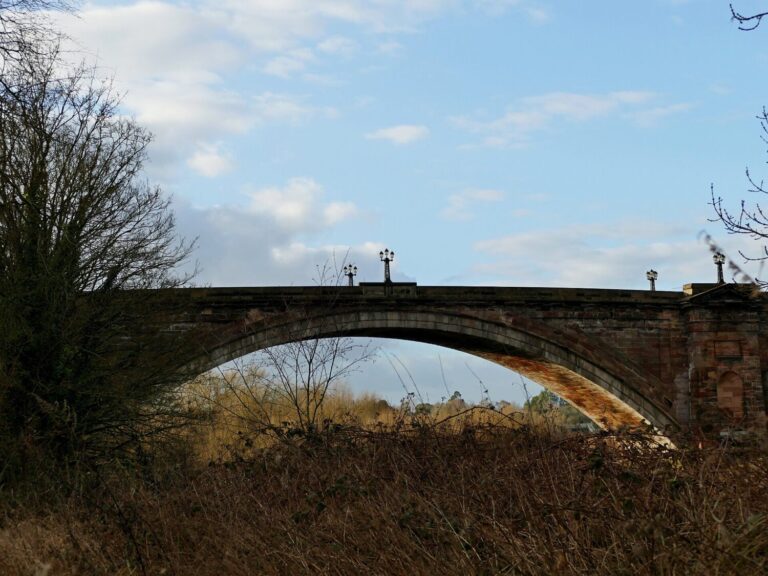 Photo: Wildlife Terry (CC0) via Wikimedia Commons
The best free view in racing
The western section of the city walls runs directly above the course, and people have been watching from up there for as long as there has been racing. It is still free, and on a race day the walls fill up with a crowd that has no intention of paying to get in. From the stretch between the Watergate and the racecourse you look straight down the back straight.
You will not see the finish properly and you will not hear the commentary, but you will get the thing that makes Chester racing distinctive: the sight of a field coming round a bend that looks far too tight for them, with a medieval city on one side and the Welsh hills behind.
Going racing
The Roodee is a five-minute walk from the Cross, straight down Watergate Street and out through the Watergate — one of the very few racecourses in Britain you can reach on foot from the middle of a city centre. The May Festival, usually early in the month, is the big one and the city is full; book accommodation a long way ahead. There are fixtures through the summer and into September, and evening meetings are the pleasantest of them.
If you are not going racing, the course is still worth the walk. On a non-race day you can see the cross base, the shape of the old harbour and the full sweep of the walls above it in about twenty minutes.
Keep reading
More Chester history.
The lost port · The Grosvenors · Georgian and Victorian Chester · All history
Photographs are reproduced under Creative Commons licences; the photographer and licence are credited beneath each image.
Hero photograph: David Smith (CC BY-SA 2.0), via Wikimedia Commons